7 Things Nobody Tells You About Adult Children Moving Back Home
Quick Answer: Adult children moving back home usually brings a genuine adjustment around house rules, finances, and identity roles that catches most parents off guard, since the relationship dynamic has to shift from raising a child to living with another adult — naming expectations early, rather than assuming old household rules automatically apply, makes the biggest practical difference.
The emotional relief of having them home safe is real, but so is an adjustment period almost nobody warns you about in advance.

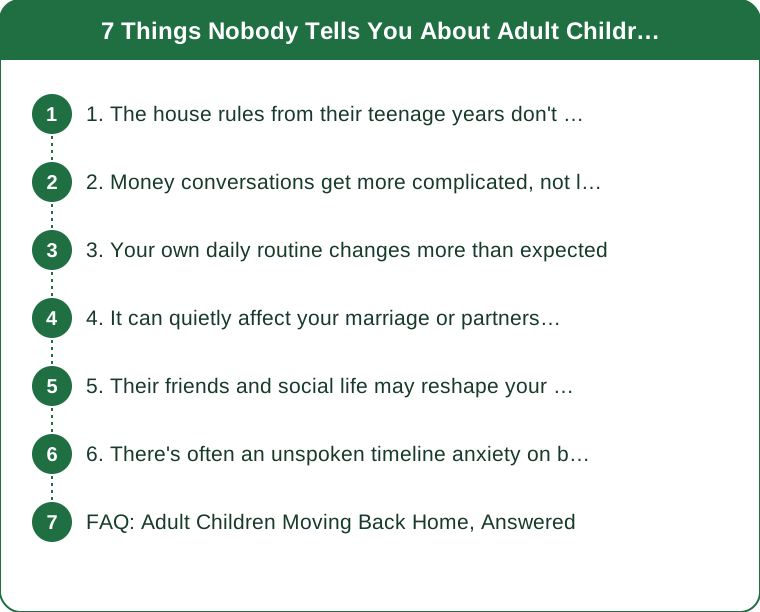
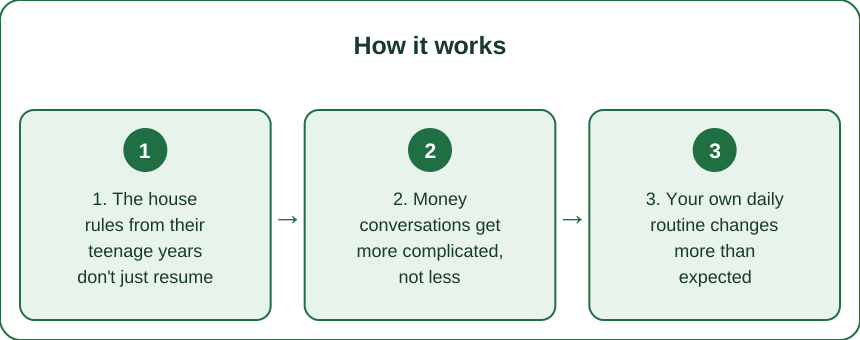
1. The house rules from their teenage years don’t just resume
Adult children living at home aren’t the same person who left, and expecting old curfews or chore expectations to apply unchanged often creates friction. New, explicitly renegotiated house norms work better than assumed continuity.
2. Money conversations get more complicated, not less
Whether they pay rent, contribute to groceries, or stay expense-free is rarely obvious and needs an actual conversation, since avoiding the topic tends to build quiet resentment on either side over time.
3. Your own daily routine changes more than expected
Even a well-adjusted, easy adult child living at home changes household rhythm — shared space, shared schedules, less built-in privacy — in ways that surprise parents who expected minimal disruption.

4. It can quietly affect your marriage or partnership
Couples sometimes find that decisions about their adult child at home require renegotiation between partners too, especially around finances or how long the arrangement is expected to last.
5. Their friends and social life may reshape your home life
An adult child at home often means more visitors, different schedules, and less predictability in the household than when it was just the original family unit, which takes real adjustment.
6. There’s often an unspoken timeline anxiety on both sides
Both parent and adult child frequently avoid discussing an actual expected timeline, which can create quiet tension — a general, revisitable timeframe discussed openly tends to reduce this more than avoiding it.
FAQ: Adult Children Moving Back Home, Answered
Is it normal to feel conflicted about this arrangement?
Yes, very — relief and frustration coexisting is extremely common and doesn’t mean the arrangement is failing.
Should there be a formal written agreement about rent and rules?
Many families find a simple written or verbal explicit agreement reduces friction more than an unspoken assumption either way.
How common is this situation actually today?
It’s increasingly common across many households, driven largely by housing costs and economic factors, not a reflection of any one family’s dynamics.
TL;DR:
- Old house rules from their teenage years usually need explicit renegotiation, not automatic resumption
- Money contributions need a real conversation to avoid quiet resentment building up
- Daily routines, marriages, and social rhythms all shift more than most parents expect
- Naming an open, revisitable timeline reduces tension better than leaving it unspoken
Keep Reading
This article is for general informational and styling purposes only. Fit, sizing, and product availability may vary.