7 Things Nobody Tells You About Becoming a Grandparent
Quick Answer: Becoming a grandparent involves real adjustments that rarely get discussed openly — from renegotiating your role with your own adult child to managing physical energy limits and figuring out boundaries around how involved to be — alongside the widely expected joy.
Everyone talks about how joyful becoming a grandparent is. Fewer people talk about the actual adjustment underneath that joy, which can be a genuinely bigger shift than expected.

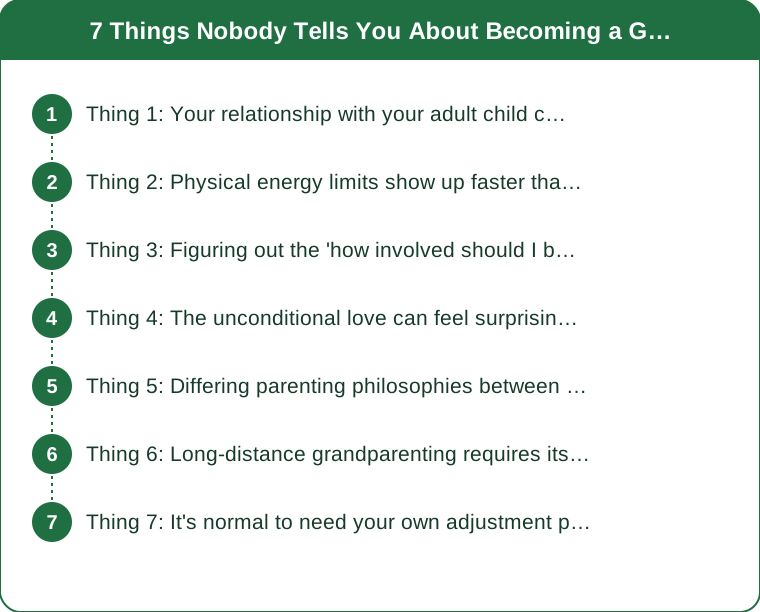
Thing 1: Your relationship with your adult child changes in a way that catches people off guard
Becoming a grandparent means watching your own child become a parent, which often shifts the dynamic between you in ways that aren’t always smooth — differing opinions on parenting choices, a new balance of who has ‘authority’ on child-rearing topics, and adjusting from decades of one relationship dynamic to a genuinely new one.
Thing 2: Physical energy limits show up faster than expected
Many new grandparents are surprised by how much more tiring active childcare is than they remember from raising their own kids, which is a normal reflection of age and changed fitness levels rather than a personal failing — pacing expectations around actual current energy levels, rather than memories of an earlier decade, helps avoid burnout and frustration.
Thing 3: Figuring out the ‘how involved should I be’ boundary is genuinely hard
There’s no universal script for how much involvement is right — some grandparents want (and are wanted for) daily involvement, others prefer a more occasional role, and mismatched expectations between grandparent and adult child about this specific boundary is a common, rarely-discussed source of friction in the first year.

Thing 4: The unconditional love can feel surprisingly different than parenting your own kids did
Many grandparents describe a specific kind of lower-pressure, purer enjoyment of a grandchild compared to the anxiety-laced love of raising their own kids, since the daily responsibility and decision-making weight sits with the parents now — this shift is real and worth naming rather than assuming your feelings should mirror parenthood exactly.
Thing 5: Differing parenting philosophies between generations cause real friction
Parenting norms and recommendations shift over time (sleep training approaches, screen time guidance, discipline styles), and grandparents raised on an earlier generation’s advice sometimes find their instincts actively conflict with their adult child’s current approach — navigating this respectfully, without undermining the parents, is a skill that takes real, ongoing effort.
Thing 6: Long-distance grandparenting requires its own deliberate effort
Grandparents living far from grandchildren often underestimate how much intentional effort — regular video calls, planned visits, small consistent touchpoints — is needed to build a real relationship compared to the natural closeness that comes from proximity; distance doesn’t have to prevent a strong bond, but it does require more deliberate maintenance than many expect.
Thing 7: It’s normal to need your own adjustment period, and that’s not a lack of joy
Even amid genuine excitement, many new grandparents experience a real adjustment period — processing the pace of change, a new family identity, and sometimes complicated feelings about aging — and feeling this alongside the joy doesn’t mean something is wrong; it’s a normal, underdiscussed part of a major life transition.
TL;DR:
- The relationship with your own adult child shifts in ways that take real adjustment
- Physical energy for active childcare is often lower than remembered from raising your own kids
- Involvement level and generational parenting differences are common, rarely-discussed friction points
- A real adjustment period alongside the joy is normal, not a sign anything is wrong
The sixth point catches a lot of long-distance grandparents off guard — closeness doesn’t happen automatically just because the love is real.
Keep Reading
This article is for general informational and styling purposes only. Fit, sizing, and product availability may vary.