7 Things Nobody Tells You About Retiring at the Same Time as Your Partner
Quick Answer: Beyond finances, the biggest adjustments couples underestimate when retiring together are sudden full-time proximity, losing separate daily identities built around work, and needing to actively rebuild shared and individual routines rather than assuming retirement will simply feel like an extended vacation.

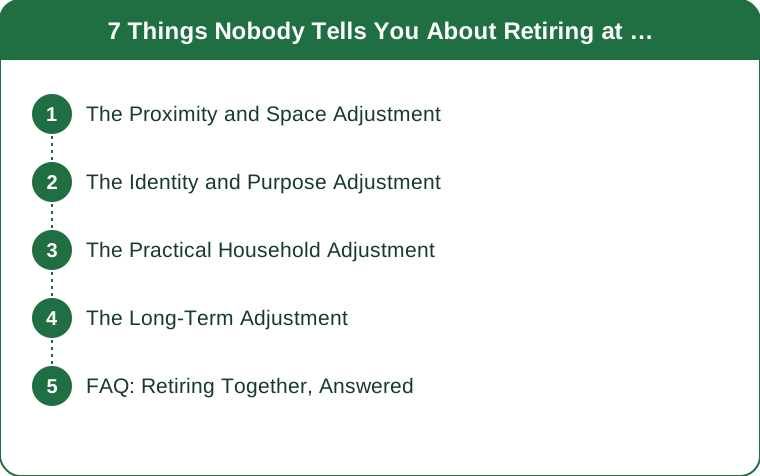
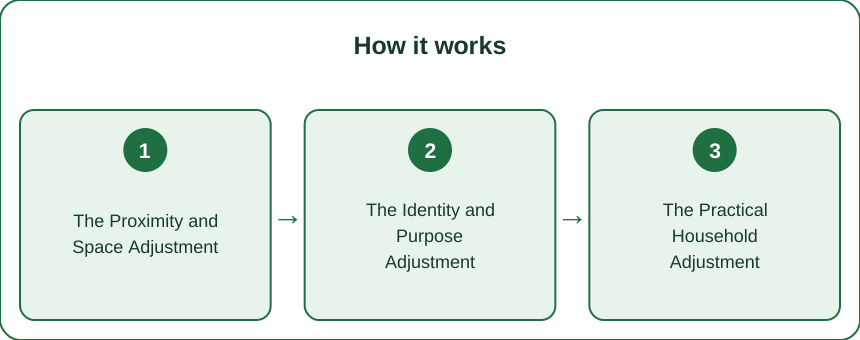
The Proximity and Space Adjustment
1. Suddenly Sharing Every Day, All Day
After decades of separate work schedules creating natural daily space, full-time togetherness is a real adjustment even in strong relationships — it’s not about compatibility, it’s about a household routine built around separation suddenly disappearing overnight.
2. Needing New ‘Alone Time’ Structures
Couples who don’t proactively carve out individual time and space often find friction emerging not from conflict but from simply never being apart, which was previously built into the day by default through work.
The Identity and Purpose Adjustment
3. Losing a Work-Based Identity Simultaneously
When both partners retire close together, neither has an unaffected external identity to lean on during the adjustment, unlike when one partner retires while the other still has a work routine and outside structure to offer stability.
4. Different Retirement Timelines for ‘Feeling Retired’
One partner may emotionally settle into retirement in weeks, while the other takes months, and this mismatch itself can create tension if it’s not named directly as a normal, expected difference rather than a sign something’s wrong.

The Practical Household Adjustment
5. Renegotiating Household Roles
Roles that were divided around work schedules (who cooks, who handles errands) often need conscious renegotiation once both partners are home full-time, since the old division may no longer make sense or may now feel unbalanced.
6. Different Social Needs Emerging
One partner may want significantly more social contact and structured activity than the other once work-based social interaction disappears, and this gap is easy to miss until it’s already causing friction.
The Long-Term Adjustment
7. It Takes Longer to Feel ‘Normal’ Than Expected
Most couples report the adjustment period takes six months to a year, not the few weeks people often expect — treating the first months as a genuine transition period, rather than expecting immediate ease, reduces unnecessary self-doubt about whether something’s wrong.
FAQ: Retiring Together, Answered
Is it better to retire at the same time or stagger retirement?
There’s no universally better option — staggered retirement gives one partner continued structure to lean on, while simultaneous retirement lets you adjust together, and the right choice depends more on each partner’s individual relationship to work and identity.
How do couples successfully renegotiate household roles after both retire?
A direct conversation naming the old division and explicitly deciding what still makes sense works better than assuming roles will naturally rebalance on their own.
Is it normal to miss work identity even if you were looking forward to retiring?
Yes, this is extremely common and doesn’t mean retirement was the wrong choice — missing structure and identity is a separate feeling from regretting the decision itself.
TL;DR:
- Full-time proximity is a real adjustment even in strong, happy relationships
- Both partners losing work identity at once removes a stabilizing outside anchor
- Household roles built around work schedules often need active renegotiation
- The adjustment period realistically takes six months to a year, not a few weeks
None of these seven things mean retiring together is a mistake — they’re just the quiet realities that planning conversations about money tend to skip entirely.
Keep Reading
This article is for general informational and styling purposes only. Fit, sizing, and product availability may vary.