7 Things Nobody Tells You About Traveling Solo After 50
Quick Answer: Solo travel after 50 tends to involve more genuine confidence and less loneliness than people expect going in, alongside a few practical realities — different energy management needs, a different relationship with spontaneity, and a noticeably different social experience meeting other travelers — that first-timers usually don’t hear about until they’re already mid-trip.
Most solo travel advice online is written by and for travelers in their twenties. The actual experience of solo travel after 50 is different in several specific, rarely-discussed ways — here are seven of them.
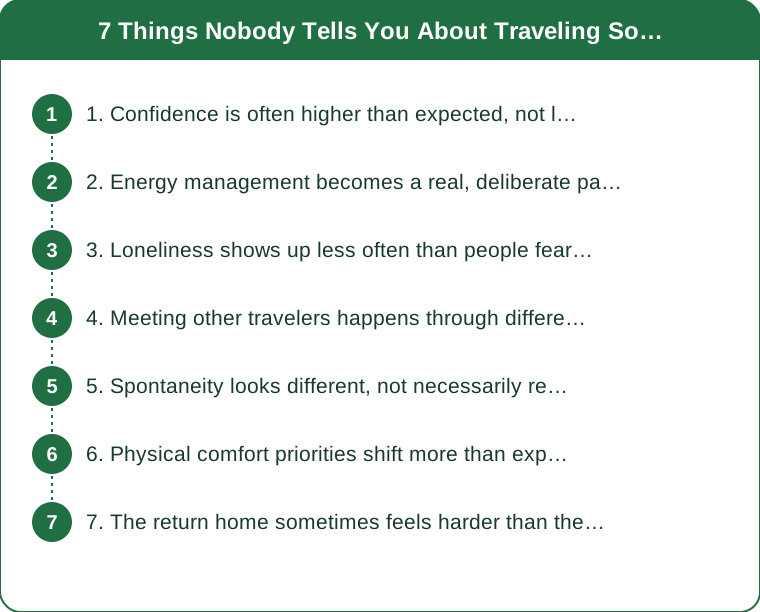
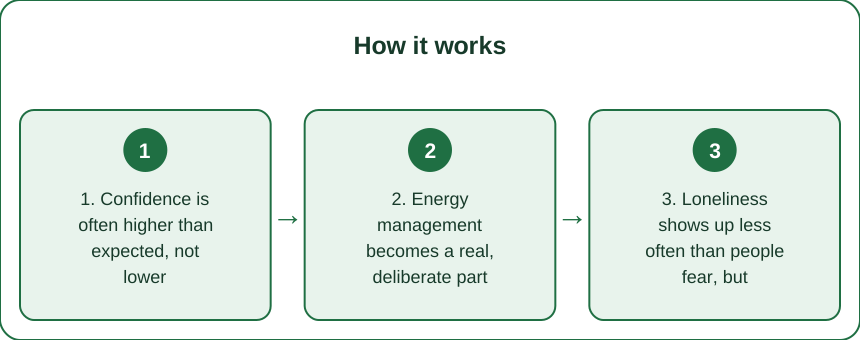
1. Confidence is often higher than expected, not lower
Many first-time solo travelers over 50 expect to feel more vulnerable or hesitant than they did traveling with others earlier in life. In practice, decades of life experience and established self-knowledge frequently translate into more genuine ease navigating unfamiliar situations than anticipated, not less.
2. Energy management becomes a real, deliberate part of trip planning
Pacing a trip with built-in rest days and realistic daily activity levels matters more than it did at 25, and successful solo travelers over 50 tend to plan for this explicitly rather than pushing through fatigue the way a younger self might have.
3. Loneliness shows up less often than people fear, but differently when it does
When it does appear, it’s often less about the immersive daily solitude and more about missing sharing a specific moment with someone particular — a slightly different flavor of loneliness than the more constant social-comparison loneliness younger solo travelers sometimes describe.

4. Meeting other travelers happens through different channels than in your 20s
Hostel common rooms and backpacker circuits, common ways younger travelers meet people, are less central after 50 — group tours, walking tours, and cooking classes tend to be more natural, comfortable connection points for this age group specifically.
5. Spontaneity looks different, not necessarily reduced
Rather than fully unplanned travel, many solo travelers over 50 describe a ‘structured spontaneity’ — a loose base plan with genuine flexibility built in, which provides enough structure to reduce decision fatigue while still preserving room for spontaneous choices.
6. Physical comfort priorities shift more than expected
Accommodation and transportation choices that felt like unnecessary splurges at 25 (a slightly better hotel, a taxi instead of a long walk with luggage) often become genuinely worthwhile investments in trip quality and energy preservation, not indulgences.
7. The return home sometimes feels harder than the trip itself
Reintegrating into a familiar routine after weeks of independence and new experiences is an under-discussed part of solo travel at this stage — many describe a genuine adjustment period after returning that isn’t talked about nearly as often as the trip planning itself.
TL;DR:
- Confidence solo traveling after 50 is often higher than first-timers expect, not lower
- Deliberate energy management and pacing matter more than they did at 25
- Loneliness appears less often than feared, though it shows up differently when it does
- Connection with other travelers and spontaneity both look different, not diminished, at this life stage
FAQ: Solo Travel After 50, Answered
Is group tour travel a good way to ease into solo travel after 50?
Yes — it offers built-in social connection and structure while still being a genuinely solo trip in terms of independence and decision-making.
How much should a first solo trip after 50 be planned in advance?
A loose structure with a few fixed anchor points (accommodation booked, one or two key activities) while leaving other days flexible tends to work well for first-timers.
Is it common to feel readjustment difficulty after returning home?
Yes, commonly reported and rarely discussed in advance — planning a gentle reentry period, not diving straight back into a full schedule, helps ease this transition.
Keep Reading
This article is for general informational and styling purposes only. Fit, sizing, and product availability may vary.