7 Things Nobody Tells You About Downsizing Your Home After 50
Quick Answer: Downsizing after 50 is logistically manageable but emotionally heavier than most guides admit — the hardest part is usually decision fatigue and unexpected grief over ordinary objects, not the physical move itself.
Most downsizing advice is a checklist. What actually happens once you start opening closets is a different, less-discussed experience — here’s what tends to catch people off guard.

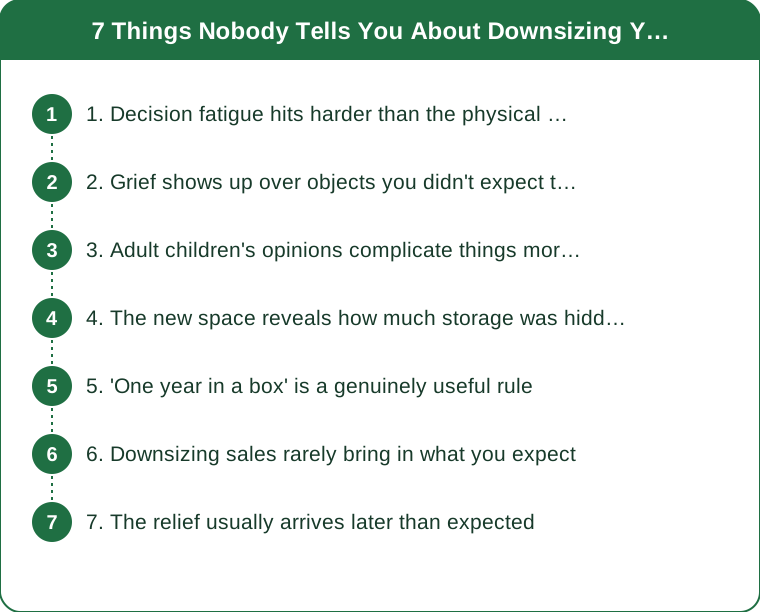
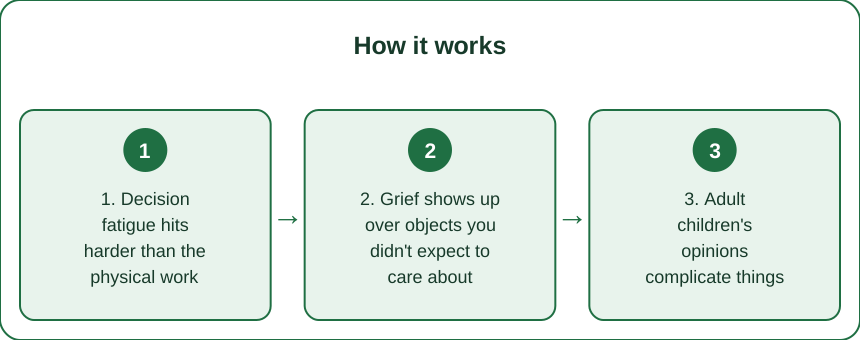
1. Decision fatigue hits harder than the physical work
Sorting hundreds of small items — deciding keep, donate, or toss for each one — is cognitively exhausting in a way that packing boxes alone isn’t. Spreading decisions across weeks, not days, prevents the fatigue that leads to rash choices you regret later.
2. Grief shows up over objects you didn’t expect to care about
It’s rarely the obviously sentimental items that trigger emotion — it’s often an ordinary mug or a stack of old recipe cards that unexpectedly stops you. This is a normal part of the process, not a sign you’re doing it wrong.
3. Adult children’s opinions complicate things more than expected
Kids often have strong feelings about items they don’t actually want to store themselves, creating friction that’s more about identity and memory than the object’s practical fate.

4. The new space reveals how much storage was hidden work
A smaller home makes visible how much a larger one was quietly absorbing — extra kitchen gear, seasonal decor, spare furniture — and adjusting to less storage takes longer than the move itself does.
5. ‘One year in a box’ is a genuinely useful rule
For undecided items, boxing them for a year and revisiting removes items you clearly didn’t miss, without forcing an immediate emotional decision under moving pressure.
6. Downsizing sales rarely bring in what you expect
Items with high sentimental or replacement value often sell for far less than anticipated, which can feel like a second loss on top of the parting itself. Setting resale expectations low in advance softens this.
7. The relief usually arrives later than expected
Most people report feeling more unsettled than relieved in the first month, with the actual lightness of a smaller footprint setting in closer to three or four months in, not immediately after the move.
TL;DR:
- Decision fatigue, not physical labor, is usually the hardest part
- Unexpected objects trigger more grief than the obviously sentimental ones
- A ‘one year in a box’ rule removes pressure from undecided items
- Real relief tends to arrive months in, not right after the move
Knowing these ahead of time doesn’t remove the difficulty, but it does make it feel less like something’s going wrong.
Keep Reading
This article is for general informational and styling purposes only. Fit, sizing, and product availability may vary.