The Second Honeymoon Economy: Traveling as Empty Nesters
Quick Answer: Empty-nest travel’s biggest advantage is calendar freedom: book shoulder season (May, September, early October) and midweek flights, where prices drop sharply and crowds thin out. Start with the trip kid-logistics always vetoed, go for 10 days or so, and build in separate-afternoons-shared-dinners days — traveling as two after twenty years of family consensus is a skill you rebuild.
For twenty years your travel calendar was hostage to a school district. Peak weeks, peak prices, peak crowds, peak everything — and the quiet knowledge that the exact same trip cost half as much three weeks later.
Then the last one moves out, and the calendar comes back whole.
The empty nest isn’t just emotional territory. It’s a structural upgrade to how you travel, and most people underuse it for the first year because the old booking habits are hard to unlearn.

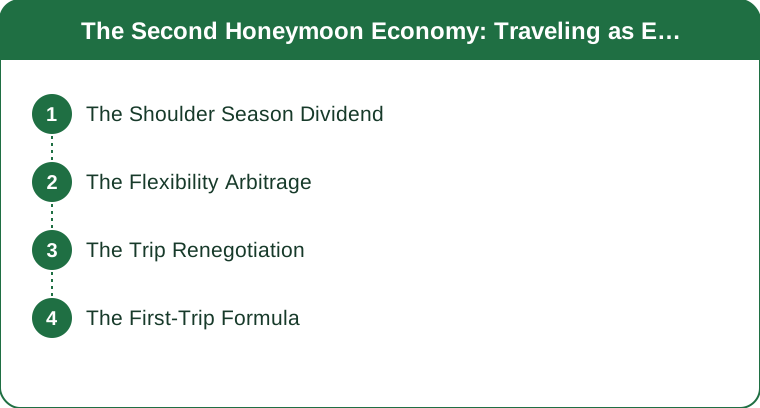
Why Is Shoulder Season Such a Big Deal?
Because it’s the months the school calendar forbade — and they’re often the best months to go.
September and May in the Mediterranean, October in Japan, late April in much of Europe: warm enough, dry enough, and priced for people without children in school. Accommodation and airfare in shoulder season commonly run 30–50% below peak, and the difference in crowding at major sites is not subtle.
The weather argument is frequently backwards, too. Peak August in southern Europe means 95°F, closed shops and queues; September means high 70s, everything open, and locals who don’t yet resent you.
Your first empty-nest trip should exploit exactly this: the same trip, upgraded version, at the family-era price.
How Do You Cash In on Flexibility?
Flexibility is the empty nester’s actual currency, and the travel industry pays well for it.
- Fly midweek. Tuesday and Wednesday departures are consistently the cheapest, and were previously impossible.
- Set fare alerts with flexible dates. With an open calendar, you’re shopping the whole month instead of defending one week.
- Take the longer trip. Two or three weeks never fit a school term. It fits now, and the per-day cost of a long trip is much lower once the flights are paid for.
- Book the shoulder of the shoulder. The first week of May and the last week of September are cheaper still, with most of the benefit.
- Consider last-minute for domestic. Not for international flights, where late booking punishes you — but for hotels, cruises and rentals, late availability can be genuinely cheap.
One caution worth naming: flexibility makes it easy to over-book yourself into a year that’s suddenly all travel and no home life. A couple of well-planned trips usually beats six scrambled ones.

What Nobody Tells You About Traveling as a Couple Again
You may not know what you like anymore. Two decades of family-consensus travel — the beach with the pool, the resort with the kids’ club — can bury your individual travel selves entirely. That’s normal, and it’s worth discovering rather than assuming.
Wanting different things isn’t a problem to solve. The most durable format couples land on is the split-day: her museum morning, his long walk, both back together for a long dinner. Nobody endures anything, and dinner has actual content.
The first trip is often slightly awkward. Ten days of uninterrupted each-other after years of logistics-mediated conversation takes a couple of days to settle into. Plan a little more structure for that first one, not less.
Travel styles diverge with age, and that’s fine. If one of you now wants slower days and the other still wants a 20,000-step itinerary, build the trip around a shared base with different daily radiuses rather than negotiating every hour.
The empty nest is also when solo and friend trips get easier. Not every trip has to be the couple trip. A week with old friends and a week together, in the same year, is a very common and very good pattern.
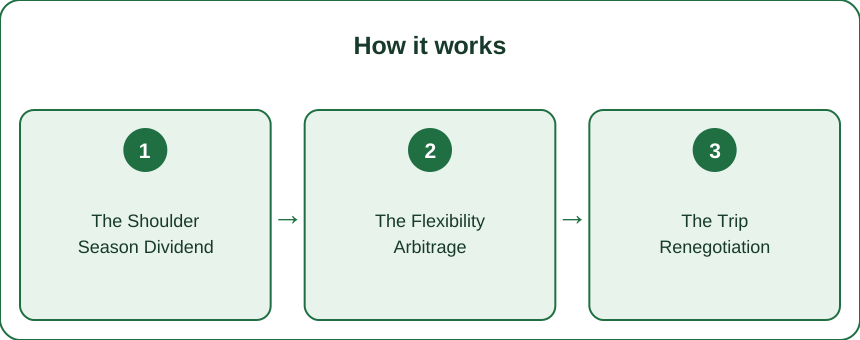
What Should the First Trip Actually Look Like?
A workable formula:
The deferred classic. The place that got vetoed by kid-logistics for fifteen years — the one with too much walking, too many museums, too long a flight. That one.
Shoulder season. For all the reasons above.
About ten days. Long enough to stop being a hurry, short enough that you’re not managing laundry as a project.
One splurge element. The family era ran on economy habits, and one ceremonial breach — the good hotel for two nights, the meal you’d normally talk yourself out of — marks the transition properly.
One unscheduled day. Built in, not hoped for. It’s the day people remember.
Book it before the calendar refills itself — because it will, and grandchildren, elderly parents and part-time work all have a way of reclaiming the freedom you just got back.
When is shoulder season for travel?
Broadly, April–May and September–October for Europe and North America, and the weeks immediately either side of a destination’s peak elsewhere. Prices drop sharply, crowds thin, and weather is often more pleasant than peak summer.
How much cheaper is midweek travel?
Tuesday and Wednesday flights typically run meaningfully below weekend departures on the same route, and hotels in business-light destinations follow the same pattern. Combined with shoulder-season timing, the two effects stack.
How do we plan a trip when we want different things?
Use a shared base and split the days: separate mornings or afternoons, shared meals and evenings. It removes the need to negotiate every activity and usually makes dinner conversation better, since you both actually did something.
TL;DR:
- Shoulder season (May, September, early October) is the empty nester’s core advantage — often 30–50% cheaper with better weather.
- Midweek flights, flexible fare alerts, and longer trips are now all available to you.
- Start with the deferred classic — the trip kid-logistics always vetoed.
- Roughly 10 days, one splurge element, one unscheduled day.
- Traveling as two is a relearned skill; use split days, shared dinners.
- Book it before the calendar quietly refills with everything else.
Keep Reading
This article is for general informational and styling purposes only. Fit, sizing, and product availability may vary.