How Empty-Nest Couples Are Actually Rebuilding Travel Together (It's Not What You'd Expect)
The assumption is that empty-nest travel means finally doing the big honeymoon-style trip that got postponed for decades. In practice, most couples find the harder and more useful work is relearning how to plan and pace a trip as two people again.

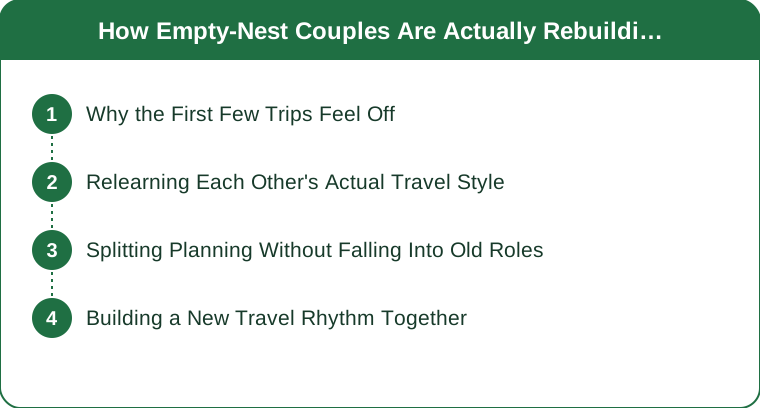
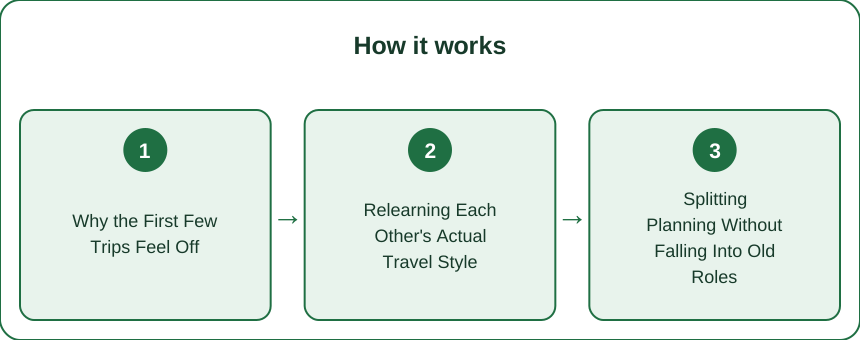
Why the First Few Trips Feel Off
The adjustment: years of trip planning built entirely around kids’ schedules and preferences leaving both partners without a clear sense of their own individual travel pace or preferences anymore, which surfaces awkwardly on the first couple of just-the-two trips.
Relearning Each Other’s Actual Travel Style
The rediscovery process: deliberately trying a few different trip paces early on, a slow single-destination trip versus a packed multi-city one, since preferences may have genuinely shifted over years of family-paced travel and can’t be assumed from decades-old memory.

Splitting Planning Without Falling Into Old Roles
The practical fix: naming out loud which partner defaults to logistics planning versus experience planning, since old family-trip roles tend to persist by default even when they no longer fit two adults with equal say in a much smaller travel party.
Building a New Travel Rhythm Together
The forward approach: starting with shorter, lower-stakes trips to rebuild shared travel rhythm before committing to a major bucket-list trip, and treating disagreements about pace or spending as information about changed preferences rather than a mismatch, and the frame (empty-nest travel works best when it starts by relearning each other’s current travel style through smaller trips, not by immediately attempting the big trip that got put off for twenty years.)
Empty-nest travel gets pictured as finally taking the big trip that got postponed for decades, but most couples find the real work first is relearning how to plan and pace a trip as two people again, after years of every decision being built around kids’ schedules and preferences. The first couple of just-the-two trips often feel oddly off simply because neither partner has a clear read on their own current travel pace anymore, which is why deliberately trying a slower single-destination trip and a packed multi-city one early on helps surface real, current preferences rather than relying on decades-old assumptions. Naming out loud which partner handles logistics versus experience planning keeps old family-trip roles from quietly persisting by default, and starting with shorter, lower-stakes trips to rebuild a shared rhythm tends to work better than immediately attempting the major bucket-list trip everyone assumes comes first.
Keep Reading
This article is for general informational and styling purposes only. Fit, sizing, and product availability may vary.