The Hobby Renaissance: Learning New Things When the House Goes Quiet
Quick Answer: Start a hobby renaissance with a sampling season: one taster class a month for six months, judged by a single question — did time disappear? Community centres and studios run cheap one-off sessions in pottery, languages, choir, kayaking and more. Classes double as friendship infrastructure, which matters, and genuine beginner learning is exactly the kind of novelty that supports cognitive reserve as you age.
The house goes quiet, and something comes back that the family years quietly spent: recurring, defensible hours.
Not stolen time. Not the hour you carve out at 5am. Actual, repeating, yours.
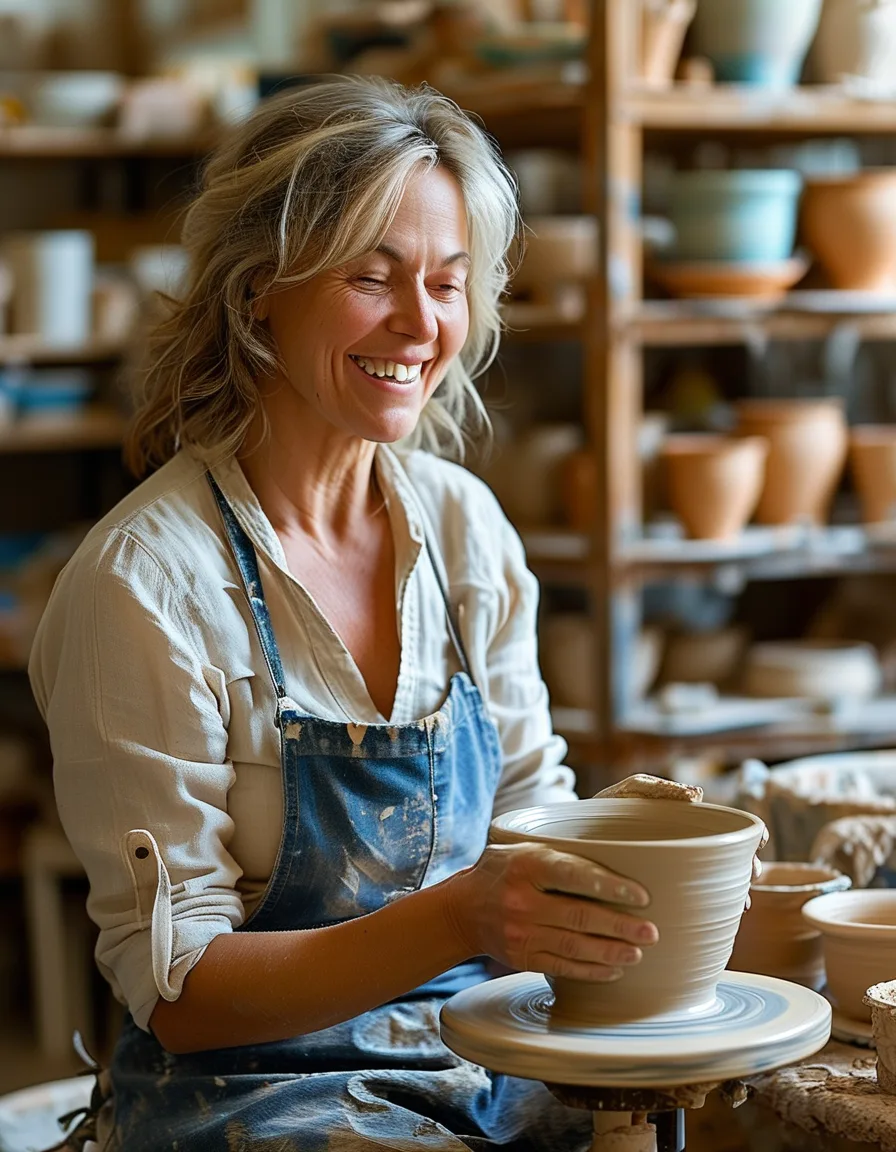
The hobby renaissance that follows — pottery wheels, language apps, kayaks, choirs, a guitar that finally gets tuned — isn’t a consolation prize for an empty house. The research on learning and aging is fairly encouraging about this, and being genuinely bad at something new is, neurologically, the whole point.
Why Is Learning Something New Good for an Aging Brain?
The concept researchers use is cognitive reserve — roughly, the brain’s resilience built through sustained mental challenge over a lifetime.
What seems to matter most is novelty and difficulty together. Doing more of something you’ve already mastered is pleasant but doesn’t demand much adaptation. Being a genuine beginner does: you’re making errors, building new motor patterns, holding unfamiliar rules in working memory, and failing regularly in a low-stakes way.
Studies on older adults learning demanding new skills — digital photography, quilting, a musical instrument, a language — have generally found better memory outcomes than social or leisure activities alone, particularly when the learning is sustained over months rather than sampled once.
The practical translation: choose the thing that’s hard. Pottery where your bowls collapse. A language where you’re humiliated by a ten-year-old. That struggle is the active ingredient, not a side effect you should try to minimise.
Worth noting honestly: this is about supporting healthy cognitive aging, not preventing disease. Nobody should take up ceramics as a medical intervention.
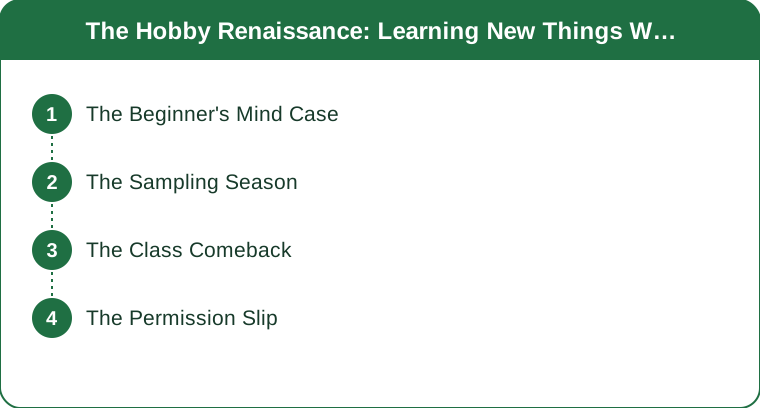
What Does a Sampling Season Look Like?
Skip the identity commitment. You don’t need to become a potter. You need data.
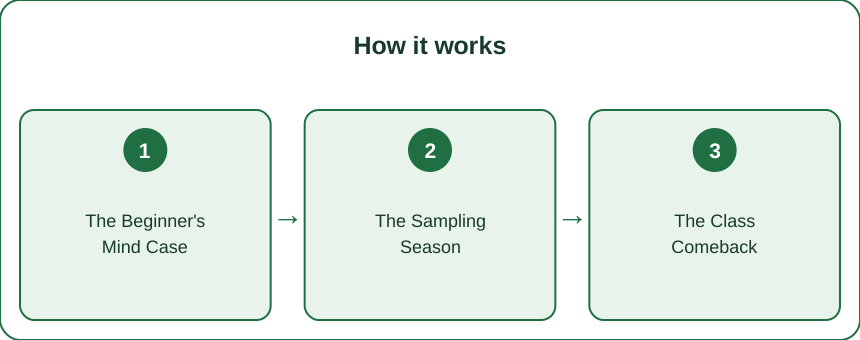
The format: one taster class per month, for six months.
- Community centres, adult education programmes and independent studios almost all run cheap one-off or four-week intro sessions.
- Pick six genuinely different things. Deliberately include at least one you’d normally dismiss.
- Budget it as an experiment, not an investment. Rent or borrow gear; buy nothing serious.
The metric: did time disappear?
That’s the whole assessment. Not “was I good at it” — you won’t be. Not “was it fun” — plenty of fun things you’ll never do again. The question is whether you looked up and two hours had gone.
The time-vanishing hobby is the keeper. The other five were data, and they cost you a few hundred dollars and six pleasant afternoons.
A useful starting menu, spanning different types of challenge: pottery or woodworking (fine motor + spatial), a language (memory + social), choir or an instrument (auditory + timing), kayaking, climbing or dance (physical + coordination), drawing or photography (perception), chess, bridge or coding (abstract reasoning).
Why Take a Class Instead of Learning at Home?
Because adult classes solve two empty-nest problems at once.
YouTube can teach you the skill. It cannot give you repeated contact with the same people, which is the single most reliable ingredient in adult friendship formation. Friendships form through proximity plus repetition plus a shared activity — and a Tuesday-night pottery studio delivers all three without anyone having to be brave about it.
That matters more than it sounds. The quiet house is often quiet socially too, and the years when friendships formed automatically through school-gate proximity are over. Choirs, studios and language groups are friendship infrastructure with a curriculum attached.
Classes also solve the follow-through problem. A booked, paid, scheduled session at 7pm on Tuesdays survives motivation dips that a “I’ll practise at home” plan does not.
If in-person genuinely isn’t available: pick an online option with live sessions and the same cohort each week, not a self-paced video library. The repetition is the point.
What Nobody Tells You About Starting Over at 50
The internal auditor is the only real obstacle. Somewhere in week two, a voice asks what this is for — whether you’ll ever be good, whether it’ll lead to anything, whether it’s a bit self-indulgent. The answer is: nothing, no, and yes. Two decades of hours went to necessary things. These hours are endowed to interesting ones. Spend them like the endowment they are.
Being visibly bad in public gets easier surprisingly fast. Usually by session three. Everyone else in a beginner class is equally bad and equally self-conscious, which is its own kind of solidarity.
Adults quit around week four, not week one. The novelty fades right before competence starts showing. Knowing that in advance is most of the defence against it.
You’ll be tempted to buy the good equipment immediately. Don’t. Borrow, rent or buy used until you’ve passed three months. The garage full of abandoned hobby gear is a well-documented phenomenon.
Physical hobbies age well if you start them now. Kayaking, dance, climbing and hiking are all easier to take up at 52 than at 62. If one of your six samples is physical, weight it slightly.
Nobody is watching. Genuinely the most useful sentence in this article.
When to see a professional: if the quiet house is producing persistent low mood, loss of interest in things you used to enjoy, or difficulty sleeping that lasts more than a couple of weeks, that’s worth raising with a doctor. Empty-nest transitions can trigger real depression, and it responds well to treatment.
What are good hobbies to start after 50?
Anything genuinely new and moderately hard: pottery, a musical instrument, a language, kayaking, woodworking, choir, photography, bridge. Prioritise things with in-person classes, since the social repetition is half the benefit.
Is it too late to learn a new skill at 55?
No. Adults learn new skills throughout life — the pace of some kinds of learning changes, but capability doesn’t disappear. Older learners often progress faster on anything involving pattern recognition and prior experience, and slower on raw memorisation. Both are workable.
How do I make friends through a hobby?
Choose activities that repeat with the same group — a weekly class, a choir, a club — rather than drop-in sessions. Show up consistently for a few months and say yes to the after-session coffee. Repetition plus a shared activity does almost all the work.
TL;DR:
- Genuine beginner difficulty is the active ingredient — pick things you’re bad at.
- Run a sampling season: one taster class a month for six months.
- The only metric that matters: did time disappear?
- Take classes, not tutorials — repeated contact with the same people is half the value.
- Expect the quit point around week four, and plan for it.
- Borrow gear for three months. Fire the internal auditor asking what it’s for.
Keep Reading
This article is for general informational and styling purposes only. Fit, sizing, and product availability may vary.