7 Things Nobody Tells You About Becoming Empty Nesters as a Couple
Quick Answer: Becoming empty nesters as a couple involves several under-discussed adjustments beyond simply having more free time — rediscovering shared identity outside of parenting, renegotiating household roles built around a child’s schedule, and managing a grief process for the parenting chapter even while genuinely welcoming the next one — and couples who name these adjustments directly, rather than expecting the transition to feel automatically freeing, tend to navigate it with less friction.
The empty nest gets framed almost entirely as a positive milestone — more freedom, more time — but several of the real adjustments underneath that framing rarely get discussed honestly before they show up.

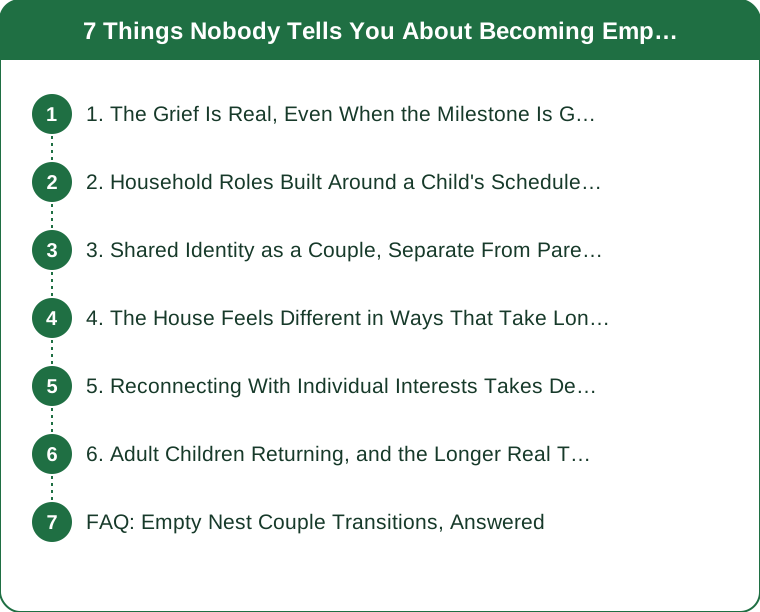
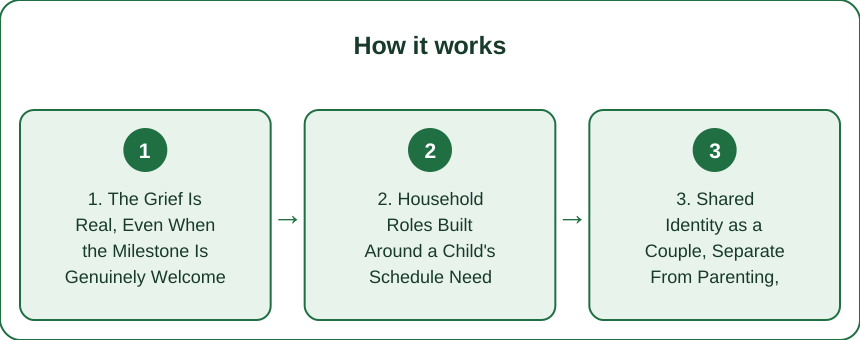
1. The Grief Is Real, Even When the Milestone Is Genuinely Welcome
Many parents feel caught off guard by a real sense of loss and grief around the last child leaving, even when they’re simultaneously excited for the child’s next chapter and their own increased freedom. These two emotional responses aren’t contradictory — they coexist, and naming the grief explicitly, rather than feeling guilty for not feeling purely happy, tends to make the transition easier to process.
2. Household Roles Built Around a Child’s Schedule Need Active Renegotiation
Years of coordinating around a child’s school, activity, and meal schedule often leave couples with household roles and routines that were really built around that schedule rather than around the couple’s own preferences. These roles don’t automatically update once the schedule disappears — they need a genuine, explicit conversation to reset.
3. Shared Identity as a Couple, Separate From Parenting, May Need Rebuilding
For couples whose day-to-day connection was largely mediated through shared parenting logistics and conversation about the kids, the empty nest can reveal an underdeveloped sense of couple identity outside that role. This isn’t a sign of a weak relationship — it’s a common byproduct of how much bandwidth active parenting takes, and it’s rebuildable with intentional effort.

4. The House Feels Different in Ways That Take Longer to Adjust to Than Expected
Beyond simple quiet, many empty nesters report the home itself feeling different — certain rooms losing their functional purpose, routines around meals and schedules feeling oddly open-ended. This adjustment period is often longer and more gradual than the single moving-out day itself suggests.
5. Reconnecting With Individual Interests Takes Deliberate Effort, Not Just Available Time
Having more free time doesn’t automatically translate into picking back up old hobbies or interests that were set aside during active parenting years — many empty nesters describe a genuine period of not knowing what they actually want to do with the newly available time, which is normal and often resolves with some deliberate exploration rather than expecting it to happen automatically.
6. Adult Children Returning, and the Longer Real Timeline
Adult Children Coming Back, Even Temporarily, Resets the Adjustment Process
Holiday visits, or a child temporarily moving back home, can reset some of the household dynamic couples had just settled into, which can feel disorienting even though it’s a welcome visit. Anticipating this reset as a normal part of the ongoing transition, rather than a setback, helps manage the whiplash.
The Timeline for Feeling Fully Adjusted Is Longer Than Most Couples Expect
Most couples report the empty-nest adjustment taking a year or more to feel genuinely settled into a new rhythm, not the few weeks or months that’s often implied. Expecting a longer timeline from the start reduces the frustration of feeling like the adjustment “should” be further along than it actually is.
FAQ: Empty Nest Couple Transitions, Answered
Is it normal for one partner to adjust much faster than the other?
Yes, this is very common — different attachment to the parenting role and different personal identity outside of it often produce genuinely different adjustment timelines within the same couple.
Does couples counseling help specifically with this transition, even for a strong marriage?
Many couples find even a few sessions genuinely useful during this specific transition, not because something is wrong, but because it provides dedicated space to renegotiate roles and identity that daily life doesn’t naturally carve out time for.
Is it a bad sign if the couple doesn’t feel an immediate sense of increased closeness once the kids are gone?
No — closeness often needs to be actively rebuilt rather than automatically re-emerging once parenting logistics free up, and this rebuilding process taking real, deliberate time is normal, not a sign of relationship trouble.
TL;DR:
- Grief and excitement about the empty nest coexist and both deserve to be acknowledged honestly
- Household roles built around a child’s schedule need deliberate renegotiation, not automatic reset
- Couple identity outside of parenting often needs active rebuilding, which is normal, not a red flag
- The full adjustment period commonly takes a year or more, longer than most couples expect going in
The empty nest transition involves real, under-discussed adjustments beyond simple freedom and quiet — naming them honestly, rather than expecting automatic ease, is what actually makes the next chapter land well.
Keep Reading
This article is for general informational and styling purposes only. Fit, sizing, and product availability may vary.