Why Your Old Fitness Motivation Stops Working After the Kids Leave
Quick Answer: Fitness motivation that was built around keeping up with kids’ activities or maintaining energy for a busy household often loses its pull once that structure disappears — the fix isn’t more willpower, it’s replacing the old external motivation with a new one tied to identity, social connection, or a concrete goal rather than a vanished daily role.
For twenty years, staying fit meant keeping up with soccer practice, school runs, and a house that never stopped moving. The kids leave, that structure disappears, and suddenly the gym visits that used to feel automatic start feeling optional — then they stop happening at all.
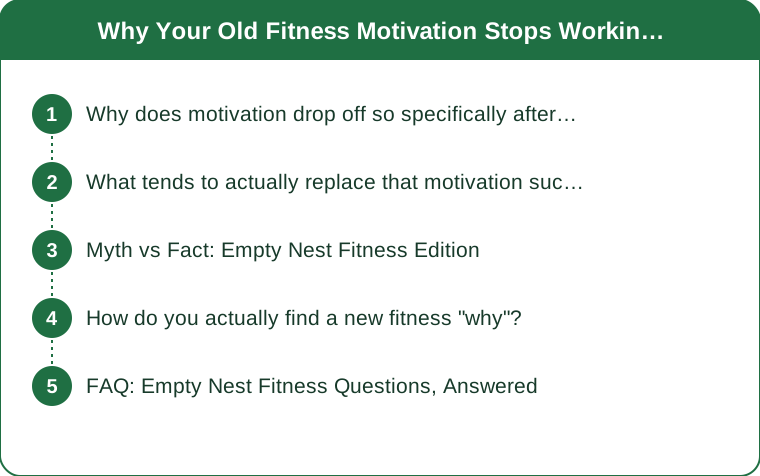
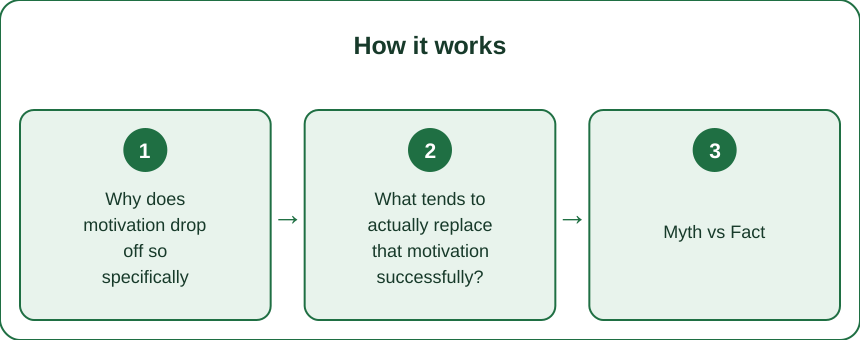
Why does motivation drop off so specifically after kids leave home?
Much of the motivation to stay active during active parenting years is externally anchored — energy for kids’ activities, modeling healthy habits, keeping pace with a demanding schedule. When that daily structure disappears, the original “why” disappears with it, even though the underlying desire to be healthy hasn’t actually gone away — it’s just lost its scaffolding.
What tends to actually replace that motivation successfully?
People who stay consistently active post-empty-nest commonly shift toward identity-based or socially-anchored motivation — joining a class or group with a regular schedule and social accountability, training for a specific event, or reframing fitness as personal time rather than a parenting-support function. The common thread is a motivation that doesn’t depend on anyone else needing you to be capable and energetic.
Myth vs Fact: Empty Nest Fitness Edition
Myth: Motivation naturally comes back once you have more free time. Fact: More free time alone doesn’t restore motivation — the psychological anchor needs to be actively replaced, not just given more room.
Myth: It’s harder to build new fitness habits in your 50s than earlier in life. Fact: Habit formation research doesn’t show age as a major barrier; the challenge is usually motivational structure, not physical or psychological capacity to build habits.
Myth: Solo workouts are just as sustainable as group ones at this stage. Fact: Many people at this life stage report social/group accountability being a notably stronger driver of consistency than it was earlier, partly because a built-in social structure (kids’ schools, coworkers) has also just diminished.
How do you actually find a new fitness “why”?
Start by naming what felt good about being active before — was it the social connection, the sense of competence, stress relief, or something else — and look for a new outlet built around that specific feeling rather than the old logistics. Signing up for something with a fixed schedule and other people (a class, a walking group, a training program for an event) tends to work better than a vague personal resolution to “exercise more.”
FAQ: Empty Nest Fitness Questions, Answered
Is it common to lose fitness motivation during this transition?
Yes — it’s a widely reported experience during major life-structure changes, not a personal failing or lack of discipline.
Does joining a class really help more than working out alone?
For many people at this stage specifically, yes — the built-in schedule and social accountability replace some of what the old family structure provided.
How long does it typically take to build a new sustainable routine?
Most habit-formation research suggests a few months of consistent repetition, though building it around a genuine new motivation tends to speed that process up.
TL;DR:
- Fitness motivation tied to parenting logistics often disappears once kids leave home
- More free time alone doesn’t restore motivation — it needs a new anchor
- Group classes and event-based goals tend to work better than vague personal resolutions
- This motivation dip is a common, normal transition, not a personal failing
The old reason to stay active is gone — the fix is finding a new one, not waiting for the old motivation to magically return.
Keep Reading
This article is for general informational and styling purposes only. Fit, sizing, and product availability may vary.